
Structural Assessment of British Old Buildings: Methods, Challenges, and Best Practices
Structural Assessment of British Old Buildings.
6/8/202611 min read
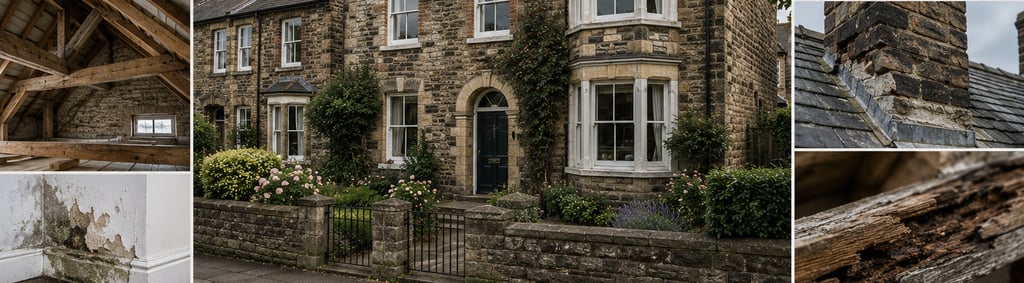
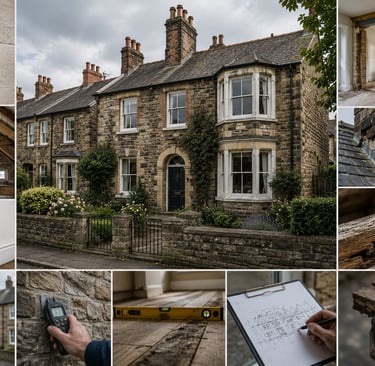
Structural Assessment of British Old Buildings: Methods, Challenges, and Best Practices
Old buildings are a familiar part of Britain’s towns, villages and suburbs. From Victorian terraces in London, Manchester and Birmingham to Edwardian villas, inter-war semi-detached houses, rural stone cottages and early twentieth-century townhouses, much of the UK housing stock was built long before modern structural codes, modern foundations and modern materials became standard. These houses often have character, generous proportions and good-quality traditional craftsmanship, but they can also present structural problems that are not always easy to understand at first glance.
Structural assessment of old buildings is therefore not just a technical exercise. It is a process of investigation, judgement and careful interpretation. A structural engineer must look at the house, understand how it was originally built, identify how it has changed over time, and decide whether visible defects are historic, active or potentially dangerous. In older British residential houses, the aim is rarely to make the building behave like a new-build property. The better aim is to understand its existing behaviour, preserve what works, and intervene only where necessary to make it safe, durable and suitable for continued use.
Understanding the Nature of British Older Houses
Before assessing an old house, it is important to understand its typical construction. Many Victorian and Edwardian houses were built with solid brick walls rather than cavity walls. Floors were commonly made from timber joists spanning between masonry walls, with timber floorboards above and plaster ceilings below. Roofs were often formed from timber rafters, purlins and ceiling joists, covered with slate or clay tiles. Foundations were usually much shallower than those used in modern housing, sometimes formed from brick footings or simple spread foundations bearing directly onto the ground.
In rural areas, older homes may be constructed from stone, cob, timber frame, or a mixture of materials that vary from region to region. A cottage in Devon, a stone terrace in Yorkshire and a Georgian house in Bath may all require different structural thinking. Even within one street, two houses that look similar from the outside may have different internal alterations, chimney removals, extensions or repairs.
This is one reason why structural assessment cannot rely only on standard assumptions. Older buildings often have their own logic. They may have moved slightly over many decades and then stabilised. They may contain walls that appear irregular but are structurally sound. They may also hide serious defects behind plaster, render, floor finishes or later decorative work. A good assessment respects the age of the building while still being clear-eyed about risk.
The Importance of Structural Assessment
A structural assessment may be required for many reasons. A homeowner may notice cracking around windows or doors. A buyer may commission an inspection before purchasing a period property. A landlord may need reassurance about the safety of a converted house. An architect may require structural advice before removing a wall, creating an open-plan kitchen, converting a loft or adding an extension.
In older British homes, common concerns include cracking, uneven floors, damp-related decay, roof spread, bulging walls, chimney instability, foundation movement, timber rot, beetle attack, corrosion of embedded metalwork and poor previous alterations. Sometimes the issue is not caused by the original construction, but by later changes. Removing chimney breasts without proper support, cutting through floor joists for services, replacing breathable lime plaster with dense cement render, or adding heavy roof coverings can all disturb the way an old house works.
The assessment helps separate cosmetic defects from structural concerns. Not every crack is dangerous, and not every uneven floor need strengthening. However, ignoring clear warning signs can allow a manageable problem to become more expensive and disruptive later.
Initial Desk Study
The first stage of assessment is often a desk study. This involves gathering available information before or alongside the site inspection. For a British residential property, useful information may include old estate agent details, previous survey reports, planning records, building control documents, historic maps, drainage records, insurance claim history and details of any extensions or conversions.
For listed buildings or homes in conservation areas, planning records can be particularly useful. They may show when walls were removed, when extensions were added, or whether previous structural repairs were approved. In many older houses, homeowners inherit very little documentation, so the engineer must combine limited records with what can be observed on site.
The desk study also considers the wider setting. Is the house on shrinkable clay, common in parts of London and the Southeast? Is it on a hillside? Is there a history of mining, made ground, poor drainage or nearby trees? Are neighbouring properties showing similar cracks? Does the street contain houses with bay window settlement or bowed front walls? The surrounding context often gives clues that are not visible from inside one property alone.
Visual Inspection and Building Walk-Through
The main part of most structural assessments is the visual inspection. This should be systematic, beginning outside the building and then moving through the interior, roof space, cellar or basement if present, and any extensions.
Externally, the engineer looks for cracking patterns, distorted brickwork, bulging walls, leaning chimneys, failed lintels, defective pointing, open joints, damaged render, blocked air bricks, poor drainage, vegetation growth and signs of previous repairs. The roof is also important. Slipped tiles, sagging ridges, spreading rafters or outward movement of walls may suggest roof problems or inadequate restraint.
Inside the house, the inspection focuses on cracks, sloping floors, sticking doors, gaps at skirting boards, uneven ceilings, damp patches, distorted openings and signs of timber decay. The position and direction of cracks matter. A fine plaster crack may be shrinkage or age-related. A diagonal crack running from a window corner may suggest movement around an opening. Stepped cracking in brickwork may point towards foundation movement. Horizontal cracking or bulging may raise concern about lateral restraint or wall instability.
The engineer also tries to follow the load path. In simple terms, this means understanding how weight travels from the roof and floors down through walls, beams and foundations into the ground. Old houses can become problematic when that load path has been interrupted by alterations. For example, a ground floor wall may have been removed to create an open-plan living space, but the wall above may still be carrying floor or roof loads. If the inserted beam is undersized, badly supported or poorly installed, cracking or deflection may follow.
Distinguishing Historic Movement from Active Movement
One of the biggest tasks in assessing older houses is deciding whether movement is historic or ongoing. Many old British homes have some distortion. Floors may slope slightly, walls may be out of plumb, and window openings may not be perfectly square. This does not automatically mean the building is unsafe. In many cases, movement happened decades ago and the structure has since settled into a stable condition.
Active movement is different. It may be linked to ground shrinkage, leaking drains, tree root activity, foundation failure, vibration, poor alterations or water damage. Signs of active movement can include fresh sharp cracks, cracks that continue through external brickwork and internal finishes, doors or windows that suddenly jam, repeated cracking after repairs, or progressive widening of existing cracks.
Crack monitoring is often used where the cause is uncertain. Simple tell-tales or digital gauges can record whether cracks are widening over weeks or months. In suspected subsidence cases, monitoring may need to continue through seasonal changes, especially where clay soils and trees are involved. This is because some houses move differently between wet and dry periods.
A careful engineer avoids jumping to conclusions too quickly. Calling every crack “subsidence” can create unnecessary alarm, affect insurance and reduce property value. On the other hand, dismissing active movement as “just old age” can be equally risky. The best assessment explains the evidence, the likely cause and the level of urgency.
Investigating Foundations and Ground Conditions
Foundations are a common source of concern in old British housing. Many Victorian and Edwardian houses have shallow foundations compared with modern standards. This does not necessarily make them defective. Shallow foundations can perform well for many years if the ground is stable, drainage is sound and loads have not changed significantly.
Problems arise when ground conditions alter. Clay soils can shrink during dry weather and swell when rehydrated. Leaking drains can soften or wash away supporting soil. Nearby excavations, new extensions, large trees or changes in groundwater can also affect older foundations. Bay windows, rear additions and outrigger extensions may have separate or shallower foundations than the main house, making them more vulnerable to differential movement.
Trial pits may be used to expose the foundation depth, width and bearing material. Drainage surveys can identify leaks. Soil investigation may be required where movement is significant or where major structural work is planned. These investigations should be targeted rather than excessive. In an occupied home, opening floors or digging near foundations must be planned carefully and made safe.
Assessing Masonry Walls
Masonry walls are central to older British houses. Solid brick walls, stone walls and party walls carry vertical loads and help stabilise the building. Their condition depends on the quality of the masonry, mortar, bonding, exposure, moisture levels and previous repairs.
Common defects include cracking, bulging, leaning, erosion of mortar joints, frost damage, failed lintels, wall tie issues in later cavity walls, and poor-quality repointing. In many older houses, the use of hard cement mortar has caused problems. Traditional lime mortar is softer and more breathable, allowing small amounts of movement and moisture evaporation. Dense cement pointing can trap moisture and accelerate decay of the surrounding brick or stone.
Bulging walls require particular attention. A wall may bulge because of roof spread, lack of restraint, decayed floor joist ends, poor bonding, historic settlement or outward pressure from internal loads. The assessment should determine whether the bulge is stable or progressive. Repairs might include improved lateral restraint, local rebuilding, stitching, repointing, or addressing the roof structure. Heavy-handed rebuilding is not always necessary, but neither should a seriously unstable wall be left untreated.
Timber Floors, Roofs and Decay
Timber is another key material in British residential buildings. Many old houses have timber floors built into external walls. Where ventilation is poor or damp is present, joist ends can decay. This is particularly common where air bricks are blocked, ground levels have been raised outside, leaking pipes have gone unnoticed, or damp-proofing work has trapped moisture.
A structural assessment may involve lifting floorboards in selected areas, inspecting underfloor voids, checking joist spans, looking for rot or insect attack, and identifying notches or holes cut for services. Some notching is common, but excessive cutting can weaken joists and cause floors to bounce or sag.
Roof structures also need careful inspection. Older roofs were often designed for lighter coverings such as slate. If the roof has later been replaced with heavier tiles, the original rafters and purlins may be overstressed. Loft conversions are another common issue. A loft may appear well finished, but if the floor structure was not properly strengthened, ceiling joists may be carrying loads they were never designed to support. Structural assessment must therefore look beyond the visible decoration and consider what is supporting the loads.
The Challenge of Previous Alterations
Many structural problems in old houses are linked to alterations rather than age alone. British homes have often been adapted repeatedly: chimney breasts removed, rear walls opened up, internal walls taken down, lofts converted, cellars excavated, extensions added, bathrooms relocated and services threaded through floors and walls.
Some alterations were well designed and properly approved. Others were done informally, especially in earlier decades when homeowners were less aware of structural requirements. A common example is the removal of a chimney breast while leaving the stack above insufficiently supported. Another is the installation of a steel beam with inadequate padstones or bearing. In terraced houses, work to a party wall can also affect neighbouring properties.
The engineer must read the building almost like a detective. Changes in plaster lines, unusual boxed-in areas, different brickwork, patched floors and altered ceiling levels can all reveal previous interventions. Where there is doubt, opening-up works may be necessary. A neat interior finish should never be taken as proof that the structure behind it is adequate.
Non-Destructive and Targeted Investigation Methods
Modern assessment methods can help reduce unnecessary damage to old buildings. Moisture meters, borescopes, cover meters, thermal imaging, level surveys, laser scanning and endoscopic inspection can all provide useful information. Crack gauges and movement monitoring can show whether defects are changing. Drain CCTV surveys can identify broken pipes without excavation.
However, technology should support judgement, not replace it. Readings can be misleading if used without context. For example, moisture meters may react differently to salts in old plaster, and thermal images can be affected by heating patterns or ventilation. The best approach combines visual inspection, knowledge of traditional construction and selective testing.
Invasive investigation still has a place. Small opening-up works may be needed to inspect beam bearings, joist ends, wall thicknesses, lintels or hidden steelwork. The key is to make investigations proportionate and focused. In a home, especially one that is occupied, disruption matters. Good communication with the owner is part of good engineering practice.
Heritage and Conservation Considerations
Where a house is listed or has heritage value, structural assessment must also consider significance. The engineer is not simply looking for the fastest repair, but for a repair that protects the building’s character and fabric. Traditional materials often need compatible repairs. Lime mortar, breathable finishes and careful timber repairs may be more appropriate than modern impermeable products.
The principle of minimum intervention is important. This does not mean avoiding necessary structural work. It means doing enough to solve the problem without unnecessarily removing historic fabric. For example, a decayed timber beam might be repaired with a discreet splice rather than fully replaced. A cracked wall might be stabilised with sympathetic stitching and repointing rather than rebuilt from the ground up.
Heritage work also requires clear documentation. Photographs, sketches, written observations and reasoning help conservation officers, homeowners and contractors understand why a particular repair is recommended.
Best Practices for Structural Engineers
A good structural assessment of an old house should be clear, proportionate and practical. The engineer should begin by understanding the building’s age, materials, form and history. They should inspect the whole building rather than focusing only on the most obvious crack. They should identify likely causes, not just symptoms. They should explain uncertainty where it exists and recommends further investigation only where it is genuinely needed.
Reports should be written in plain English. Homeowners often feel anxious when structural defects are mentioned, so vague or dramatic language is unhelpful. A useful report explains what was seen, what it probably means, how serious it is, what should be done next and how urgent the action is. It should also distinguish between maintenance, repair, monitoring and immediate structural intervention.
Best practice also means considering buildability. A technically perfect repair is of little use if it cannot be installed safely in a small, terraced house with limited access. Cost, disruption, party wall matters, temporary works and sequencing all matter in residential projects.
Best Practices for Homeowners
Homeowners also play an important role. Regular maintenance is one of the best forms of structural protection. Gutters, downpipes, drains, roofs, pointing, external ground levels and ventilation should not be ignored. Many structural problems begin with water. A leaking gutter can saturate a wall, rot timber, damage plaster and eventually affect structural performance.
Homeowners should keep records of cracks, repairs and changes. Photographs with dates can be very useful. If cracks appear suddenly, widen noticeably, or are accompanied by sticking doors, sloping floors or external brickwork damage, professional advice should be sought. It is also sensible to get structural advice before removing walls, altering chimneys, converting lofts or excavating basements.
Older houses should not be judged by the standards of a brand-new property. Some unevenness, minor cracking and irregularity may be part of their long history. The important question is whether the building is safe, stable and properly maintained.
Conclusion
Structural assessment of old British buildings requires more than calculation. It requires patience, observation and respect for traditional construction. Victorian terraces, Edwardian houses, stone cottages and inter-war semis were not built in the same way as modern homes, and they should not be assessed as though they were. Their materials behave differently, their foundations are often shallower, and their histories are often complicated by decades of alteration.
The best assessments look for causes rather than quick labels. They separate historic movement from active movement, identify moisture and maintenance issues, consider the effects of previous alterations, and recommend proportionate repairs. They also recognise that preserving an old house is not about freezing it in time. It is about helping it continue to serve modern life safely and comfortably while retaining the character that makes it valuable.
In the end, a well-assessed old building is not simply a problem to be fixed. It is a structure to be understood. When engineers, surveyors, homeowners and contractors approach it with care, an old British house can remain strong, useful and loved for generations to come.
References
The following sources were consulted when preparing this article:
Institution of Structural Engineers. Appraisal of Existing Structures, Third Edition.
Institution of Structural Engineers. Guide to Surveys and Inspections of Buildings and Associated Structures.
Historic England. Practical Building Conservation Series.
Historic England. Principles of Repair for Historic Buildings.
Historic England. Maintenance and Repair of Older Buildings.
British Standards Institution. BS 7913: Guide to the Conservation of Historic Buildings.
Building Research Establishment. BRE Digest 251: Assessment of Damage in Low-Rise Buildings.
Royal Institution of Chartered Surveyors. Home Survey Standard.
Society for the Protection of Ancient Buildings. Old Buildings and Repair Guidance.